ServicesExtractions
Tooth Extractions in Auburn
Removing a tooth is never our first idea. We look closely, take X-rays and tell you plainly whether the tooth can be saved. If it can't, we numb the area well, work gently and send you home with clear aftercare steps.

When Taking a Tooth Out Is the Right Call
Most teeth are worth saving, and a filling or crown often does the job. But some teeth are cracked below the gumline, have lost too much bone support or carry decay that has gone too deep to repair. Leaving them in place can mean ongoing pain, infection that spreads or damage to the teeth beside them.
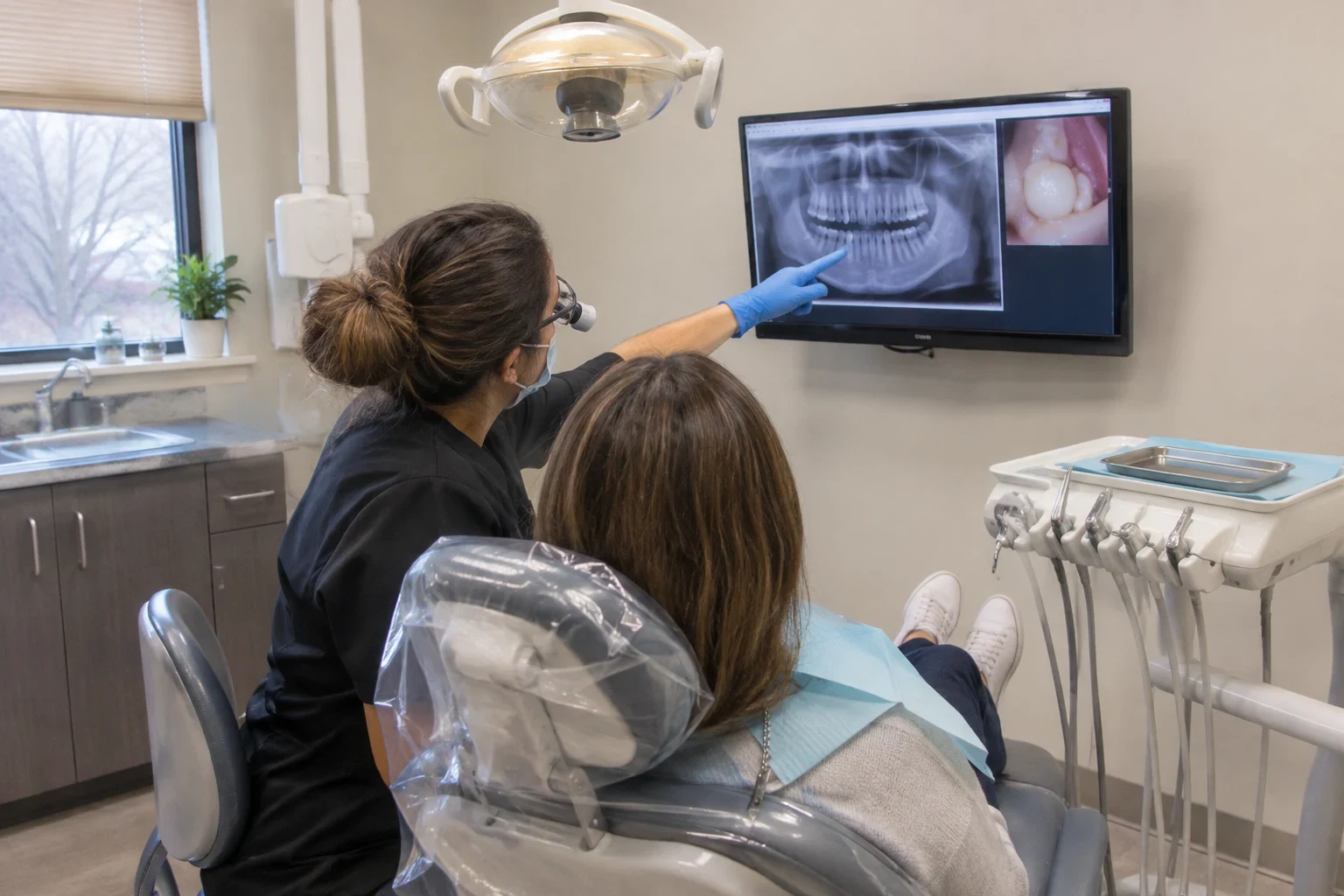
Before we suggest an extraction, we examine the tooth, check the gums around it and take X-rays to see the roots. Then we show you what we found and explain your options in plain words, including what happens if you wait. You decide with the full picture in front of you.
If an X-ray shows something better handled by an oral surgeon, such as a deeply impacted wisdom tooth, we'll tell you that honestly and help you with the next step.
What Comes With Your Extraction Visit
- 01
A look before anything else
We examine the tooth and take X-rays of the roots and surrounding bone first. That shows us how the tooth should come out and flags anything we need to plan around.
- 02
Your options, explained plainly
You hear whether a repair is possible, what removal would involve and which replacement choices could make sense down the road. You get the facts and the time to decide.
- 03
Numbing done patiently
We give the local anesthetic time to work and test the area before starting. What you should notice is pressure, never a sharp sting.
- 04
Careful removal
We ease the tooth loose a little at a time so the bone and gum stay protected. A broken tooth or one with curved roots may be divided into sections so it lifts out with less force.
- 05
Written aftercare
You go home with printed guidance on bleeding, swelling, eating and keeping the area clean, along with the warning signs to watch for over the next few days.
- 06
Thinking ahead about the space
When the gap could change your bite or your smile, we discuss replacing it after healing, for example with a bridge through our Crowns & Bridges service.
Questions about Extractions?
Call(508) 682-5159When Removing a Tooth Becomes Likely
A split reaching under the gumline
Once a fracture travels down toward the root, a crown usually cannot hold the pieces together. You may notice pain as you bite down and let go.
Swelling or pain that won't stay gone
A throbbing ache, a sour taste or a puffy gum beside one tooth often signals infection. Whether the tooth can be kept is something the X-ray shows us.
Movement when you touch the tooth
Advanced gum disease can break down the bone anchoring a tooth. If too little remains, taking it out can help protect its neighbors.
More cavity than tooth
When decay has eaten away most of the tooth, there may be nothing solid enough left to support a filling or a crown.
Not enough room for straightening
Now and then a tooth is removed so the others can move into line. We suggest it only when the exam and X-rays back it up.
What Happens on the Day of Your Extraction
- 1
Arrival and a quick health check
We start by reviewing your medical history and the medicines you take, because blood thinners and some conditions change our plan. Any questions you have get answered before treatment begins.
- 2
Getting you numb
A numbing gel goes on first, then the local anesthetic, and we wait until both tooth and gum have no feeling. Raise a hand if anything feels sharp and we pause right away.
- 3
Taking the tooth out
We gently loosen the socket and lift the tooth free, dividing it into pieces when that is gentler. Once you are numb, a simple extraction is often over in minutes.
- 4
Helping the site start healing
Gauze goes over the socket so a clot can form, since that clot is the base for healing. If the spot needs it, we place a stitch or two.
- 5
Recovery at your pace
Keep biting on the gauze for a bit, take it easy for the rest of the day and choose soft foods. We go over how to keep the clot in place and when a call to us makes sense.
What Goes Into the Cost of an Extraction
We give you a figure only after we've examined the tooth and studied the X-rays, because no two teeth come out quite the same way. Our office accepts most dental insurance plans, and we're glad to go over what your plan is likely to cover before treatment. If you don't have coverage, our Office Dental Plan for patients without insurance is worth asking about. Spreading the cost out is possible too, through the CareCredit Patient Payment Plan.
- Simple lift or surgical removal
- When the whole tooth stands above the gum, it usually comes out in one piece and the visit is shorter. A tooth broken off at the gumline, or one we need to section, calls for more time and closer work.
- Root length and shape
- Long, curved or fused roots have to be eased out slowly so the bone around them stays intact. That extra care is part of the price.
- Infection in the area
- A badly infected site sometimes needs calming down before removal or a check afterward. Either one can add a visit to your treatment plan.
- Replacing the tooth later
- The extraction is priced by itself. Should you choose a bridge or another option to fill the gap, that comes as a separate estimate, and we go through each item with you before you agree to anything.
Extraction Questions Patients Ask Us
Is having a tooth pulled painful?
Once the area is properly numb, most patients notice firm pressure and movement, not sharp pain. Some tenderness for a few days afterward is normal, and it usually eases with the pain relief we suggest. We pick that advice based on your health history and any medicines you take.
Is there a way to keep the tooth?
Many times there is, and we always check that first. A filling or a crown can rebuild a lot of damaged teeth. When the X-rays show a repair would not hold up, we point out exactly what we see and talk through how losing that tooth affects your bite.
How long until I'm healed?
For most people the gum feels a lot better within about a week. The bone beneath keeps rebuilding for several more weeks. Most patients are back to work or school the next day, sticking with softer foods for a little while.
What should I know about dry socket?
Dry socket is when the clot that forms in the empty socket comes loose too early, leaving bone uncovered and sore. For the first few days, avoid straws, smoking and forceful swishing so the clot stays put. If the ache gets stronger around the second or third day instead of fading, give us a call and we'll see you.
Does the gap need to be filled?
It depends on where it is. Losing a back tooth at the very end of the row often causes little trouble, but a space in the middle can let nearby teeth drift. We will tell you straight whether replacing it matters for you and what the options are.
Can you remove wisdom teeth?
That comes down to their position. Wisdom teeth that have fully erupted can usually be taken out right here. If the X-rays show one buried deep in the bone or sitting near a nerve, we explain why and refer you to an oral surgeon.
Find Out If Your Tooth Can Be Saved
If a tooth is aching, cracked or loose, start with an exam and an honest answer. Patients come to us from Auburn, Worcester, Millbury and nearby towns.