ServicesCrowns & Bridges
Crowns & Bridges in Auburn, MA
A cracked tooth, a filling that keeps failing or a gap where a tooth used to be can all be fixed. We start by looking closely, explain what we see in plain words, and only then talk about whether a crown or bridge is the right answer.
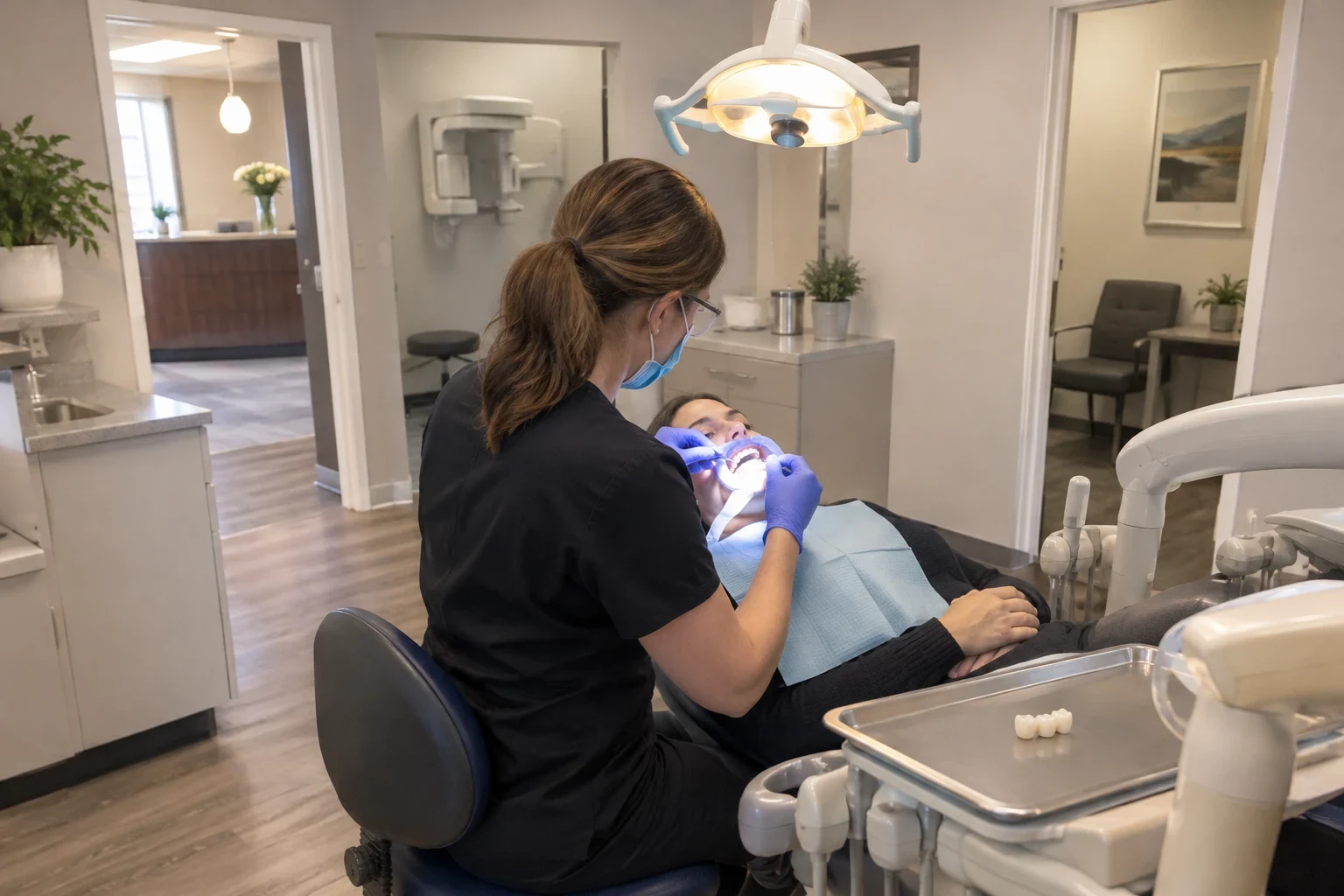
When a crown or bridge makes sense
Think of a crown as a fitted cover for a tooth that can no longer hold up on its own. It wraps the tooth above the gumline, keeps a cracked tooth from splitting further, shields a tooth hollowed out by a big filling, and finishes off a tooth that has had a root canal. A bridge closes the space left by one or more lost teeth, with a replacement tooth held between crowns that rest on the teeth beside the gap.
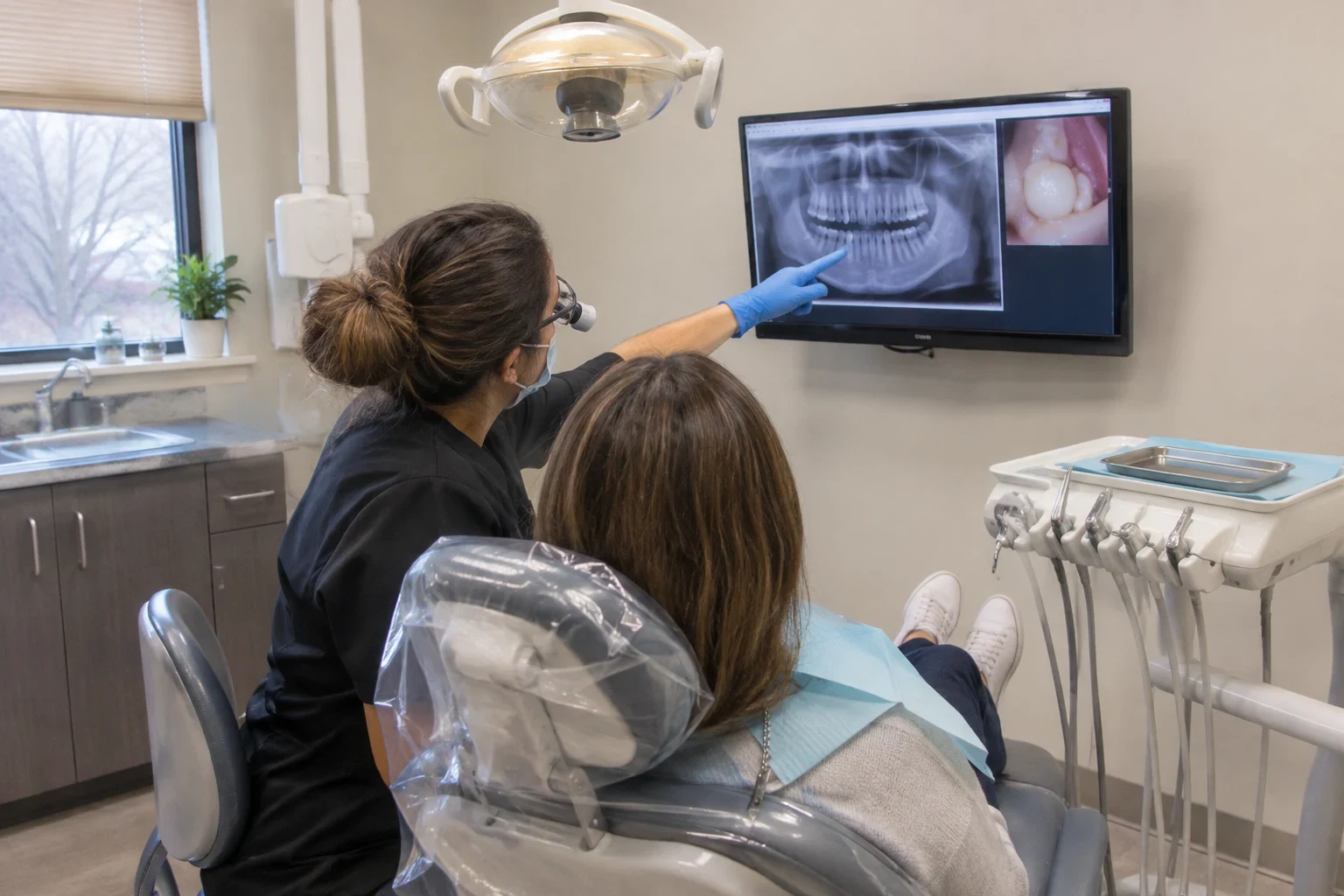
Plenty of damaged teeth do fine with a filling instead, and if that is true for yours, you will hear it from us. Every recommendation follows an exam and X-rays, and we put the images on the screen so you can see the crack, the decay or the bone support with your own eyes.
Patients come to us from Auburn and towns nearby such as Worcester, Millbury and Oxford. What we aim for is the same in every chair: a bite that feels right, a restoration built to last, and a treatment plan you fully understand before you agree to it.
What your crown or bridge treatment includes
- A full exam of the tooth
- We check the tooth, the gum around it and your bite, and take X-rays to see the root and the bone. You get a plain explanation of what we found.
- An honest choice of options
- If a filling can do the job, we say so. If a crown is needed, we explain why, and for a missing tooth we walk through how a bridge works and what it asks of the neighboring teeth.
- Material matched to the tooth
- Front teeth usually get all-ceramic or porcelain crowns that blend with your smile. Back teeth that take heavy chewing forces often do better with zirconia or porcelain fused to metal. We explain the tradeoffs in strength and appearance.
- A temporary crown
- While your permanent crown or bridge is being made, you wear a temporary so the tooth stays protected and you can eat and smile normally.
- Fitting and bite adjustment
- On the final visit we check the fit, the color and how your teeth meet, then cement it in place. Small adjustments now prevent soreness and chipping later.
When a tooth is telling you it needs more support
A sharp twinge on chewing
Pain that flashes when you chew, especially as your teeth release, often points to a crack. A crown can hold the tooth together so the crack does not spread toward the root.
A filling that keeps breaking
When a filling takes up most of a tooth, the walls around it get thin and can break. Chips or a filling that keeps loosening are good reasons to have us check it.
Chipped or flattened teeth
Night grinding can wear teeth down, and biting something hard can snap off a cusp. In both cases there may be too little tooth left for a filling to grip.
A back tooth with a root canal
Teeth that have had a root canal become more brittle as the years pass. Covering a back tooth with a crown helps it stand up to chewing without splitting.
An open space in your bite
When a tooth is missing, the teeth on either side tend to tip into the space and the tooth above or below can drift toward it. A bridge closes the gap and keeps your bite steady.
How a crown or bridge visit goes
- 1
Exam and findings
We examine the tooth, take X-rays and photos, and go over what we see with you. You leave with a clear treatment plan and time to think it over.
- 2
Preparing the tooth
After numbing the area so you stay comfortable, we gently shape the tooth so the crown can fit over it. For a bridge, we prepare the teeth on both sides of the gap.
- 3
Impressions and a temporary
We take an impression or scan of your teeth, pick a shade that matches your smile, and place a temporary crown or bridge. The lab then makes your permanent restoration, which usually takes a couple of weeks.
- 4
Fitting the final crown or bridge
We remove the temporary, try in the permanent piece, check the fit and your bite, and cement it once everything feels right. We also show you how to clean around it, especially under a bridge.
What moves the price of crown and bridge work
We can only price a crown or bridge after we have looked at the tooth and the X-rays, so your quote comes after the exam, not before. The written treatment plan lists each step on its own line, which means the total does not shift partway through. Most dental insurance plans are accepted here. Patients without coverage can ask about our Office Dental Plan, and the CareCredit Patient Payment Plan is there if you would like to spread the cost out.
- Single tooth or several
- A crown covers one tooth. A bridge joins at least three units, a crown on each tooth beside the gap with a replacement tooth between them, so it costs more than a single crown.
- Which material fits the tooth
- Lab fees differ for all-ceramic, zirconia, porcelain fused to metal and gold. We recommend based on where the tooth sits in your mouth and how much chewing force it handles.
- Damage under the surface
- Sometimes old fillings hide decay, or there is too little tooth left to hold a crown without a core buildup first. Either adds a step, and we show you the X-ray before it goes into the plan.
- What your insurance pays
- Many plans cover a share of a crown or bridge when it is needed to keep a tooth healthy. We help you check your likely coverage before any work starts.
Common questions about crowns and bridges
Something not covered here? (508) 682-5159
Will I feel anything while the crown is being placed?
The tooth is fully numbed before we start, so what most patients feel is pressure rather than pain. The gum around the tooth can be a little tender for a day or two afterward. Usually an over-the-counter pain reliever handles that.
How many years will my crown hold up?
A well-fitted crown that you care for can last a long time. How long depends on the material, how your teeth come together, whether you grind at night and how well you clean along the edges. Seeing us for regular exams and cleanings lets us catch early wear at the margins.
What can I eat while I have the temporary on?
Most foods are fine. Favor the opposite side, avoid sticky or very hard things like caramel and hard candy, and slide floss out sideways instead of pulling it back up between the teeth. If the temporary comes loose, give us a call and we will fit you in to reseat it.
Are there other ways to fill a gap besides a bridge?
Yes, a bridge is just one option. It works well when the teeth next to the space are healthy and strong enough to support it. During your exam we look closely at those teeth and talk through whether a bridge suits you.
How do I know if I need a crown and not just a filling?
It depends on how much healthy tooth is left. When most of the tooth is intact, a filling is often the better choice, and we will tell you that directly. When the remaining walls are thin or already cracked, a crown is what holds the tooth together.
Find out what your tooth actually needs
Start with an exam and a plain explanation of what we see. From there, we build a treatment plan around your tooth, your budget and your schedule.