Why Is My Dental Cleaning So Expensive? An Auburn Dentist Explains the Bill
A surprising bill is frustrating, so here is a plain look at what usually sits behind it and what you can ask before your next visit.
Why is my dental cleaning so expensive?
A cleaning bill usually covers more than the cleaning itself. The visit often includes an exam, X-rays and sometimes fluoride, each billed on its own line. If tartar has built up below the gums, you may need a deep cleaning, which takes longer and is billed differently. Insurance limits and deductibles change what you pay too.
What is actually on a cleaning bill?
Most people think of a checkup as one thing. On paper it is several separate services, and each one has its own code that your dental office sends to your insurance company. When you see the itemized statement, the total starts to make more sense.
A routine visit for an adult can include some or all of the items below. Not every patient needs every item at every visit, which is why two people can leave the same office with very different bills.
- A periodic exam, where the dentist checks teeth, gums, bite and soft tissue
- X-rays, such as bitewings to look for decay between teeth, or a full set taken every few years
- The cleaning itself, which can be a routine cleaning, a deep cleaning or periodontal maintenance
- Fluoride varnish, which some plans cover only for children
- Gum measurements, sometimes called periodontal charting
Why would I need a deep cleaning instead of a regular one?
A routine cleaning removes plaque and tartar above the gumline and just under it. It is meant for gums that are healthy or close to it. When gums have pulled away from the teeth and formed deeper pockets, tartar hides down where a routine cleaning cannot reach.
That is when a dentist may recommend scaling and root planing, usually called a deep cleaning. It is often done one section of the mouth at a time, sometimes with numbing, so it takes longer and is billed per section. Insurance plans also tend to cover it at a different rate than a preventive cleaning.
Patients who have had a deep cleaning usually move to periodontal maintenance visits afterward. These are more involved than a standard cleaning, and they may be scheduled more often to keep the gums from sliding backward.
How do we decide what you need?
We look first and recommend second. Before any cleaning plan is set, we examine your teeth and gums, measure the pockets around each tooth and review your X-rays. Healthy gum pockets are shallow, and deeper readings or bleeding tell us where tartar and infection may be sitting.
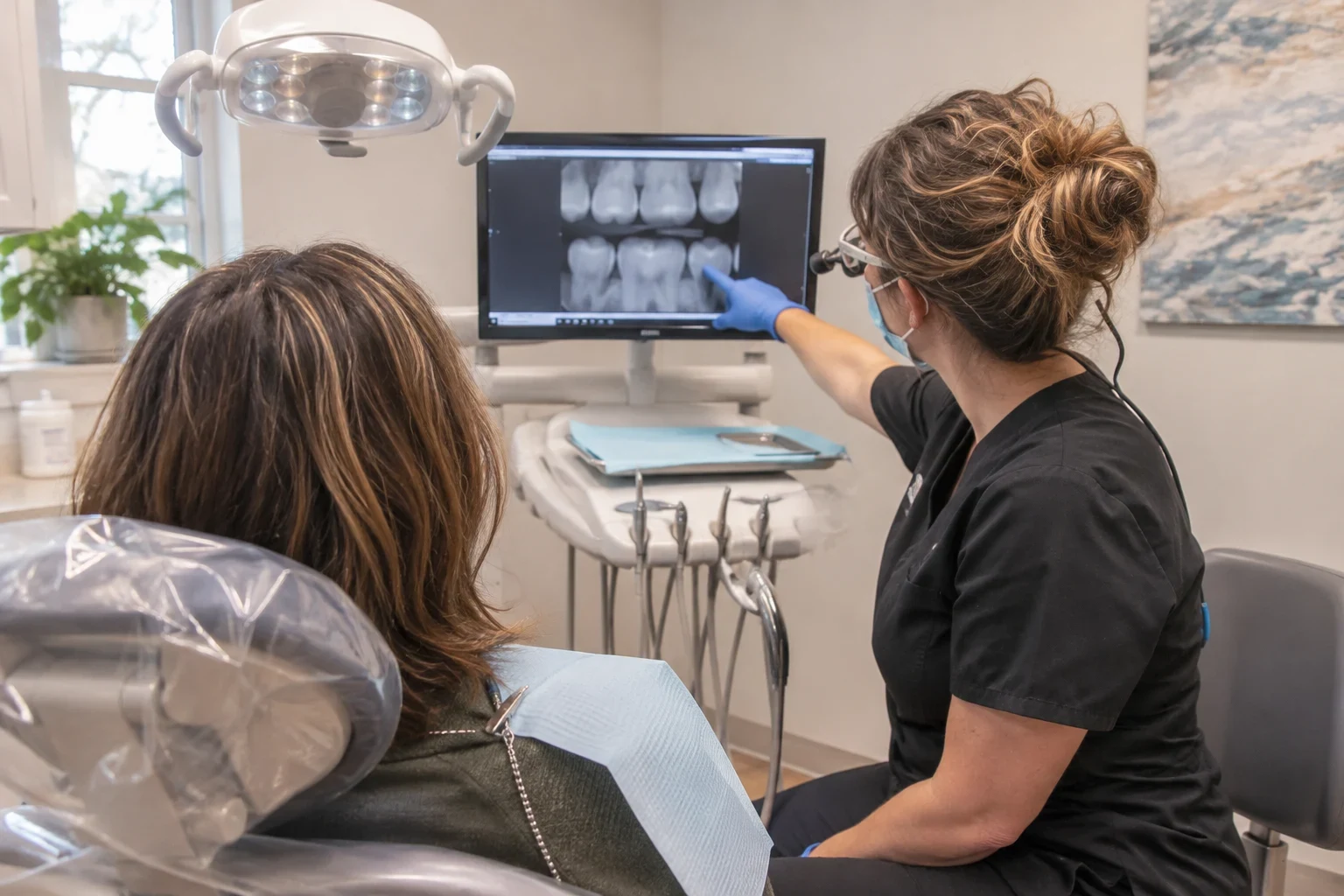
Then we show you what we found. You can see the X-rays on the screen and hear the measurements read out, so a recommendation for a deep cleaning is never just a line on a form. If a routine cleaning is all you need, that is what we tell you.
If you are not ready to start a larger treatment plan the same day, that is fine. We write down what we saw so you can think it over, check your benefits and come back to it.
Why does my insurance not cover the whole cleaning?
Many dental plans pay well for preventive care, but well is not the same as fully. A few common rules catch people off guard, and none of them mean anything went wrong at the visit.
Our office accepts most dental insurance plans, and our front desk can walk you through what your plan is likely to cover before treatment begins. Your insurance company makes the final call on payment, so we suggest asking us for the procedure codes ahead of time if you want to check with them directly.
- Frequency limits, such as two cleanings per year or a full set of X-rays only every few years
- Deep cleanings and periodontal maintenance often fall under basic or major care, with a higher share for you
- Deductibles that apply to anything outside preventive care
- Out-of-network visits, where your plan may pay less
- Fluoride or other add-ons that your plan may not cover for adults
How can I keep the cost of cleanings down?
The most reliable way is also the least exciting one: keep up with regular visits. Tartar that is removed every few months stays above the gumline, where a routine cleaning handles it. Long gaps between visits are often what turn a simple cleaning into a deep one.
Daily habits help too. Brushing twice a day, cleaning between your teeth and telling us about bleeding gums early all make the next visit simpler.
If you do not have insurance, ask about our Office Dental Plan for patients without insurance. For larger treatment, we also offer the CareCredit Patient Payment Plan so you can spread the cost out.
More questions about cleaning costs
- Can I skip X-rays to lower my bill?
- You can talk with us about it, and we will explain what each image is for. X-rays show decay between teeth and bone loss that we cannot see by looking, so skipping them for long stretches can let small problems grow.
- Why did my child's cleaning cost less than mine?
- Children usually have healthier gums and less tartar, so they rarely need deep cleanings. Many plans also cover fluoride and some preventive care for kids at a higher rate than for adults.
- Will you tell me the cost before you start?
- Yes. If our exam shows you need more than a routine cleaning, we explain the findings and go over the expected cost and insurance estimate before treatment begins.
- Do I need a deep cleaning every year?
- Usually not. Most patients have a deep cleaning once for a problem area, then keep their gums stable with regular periodontal maintenance visits.
See what your gums actually need
A call gets you an appointment for an exam and cleaning. We look closely, show you what we find and explain the costs before anything more is done.